
a review by Richard James MacCowan (founder - Biomimicry Innovation Lab)
"You're not going to believe this," is how Lorna Gibson says she opened every conversation with her MIT colleagues while she was writing this book. Go and stand beside a pond on a cold morning. Watch a duck haul itself out onto the bank and shake. The water comes off in sheets, and within seconds the bird is dry.
Why?
If you thought of the preen gland and its oils, you are in good company, and you are very much wrong. It is one of those explanations/legends in biology that has been repeated so often nobody thinks to check it. Feathers keep their water repellency after the oils and waxes have been cleaned off. They keep it even when the preen gland has been removed at hatching. Whatever is going on, oil is not the mechanism.
That gap, between what we can watch and what we can actually account for, is where Lorna Gibson has chosen to work. For me, this is extremely important as I seem to spend much of my time separating myths of nature from actual facts that biologists have identified. The bird aspect takes me back to my summers on the west coast of Scotland, learning about plants and animals along the Loch Fyne coastline with my grandfather. I still have a fascination with cormorants to this day!
Gibson taught materials science and engineering at MIT for nearly forty years. She is also a lifelong birder, and in the epilogue explains what started the book. Browsing the science and nature shelves over many years, she found plenty of popular titles by biologists, by mathematicians, by physicists, and almost none by engineers. Birds seemed a reasonable way to close that gap.
Her method comes from the overlap between her two habits. Birders raise binoculars to look closely at the outside of a bird so they can tell one species from another. Materials scientists put a sample under a microscope to look closely at the inside of a material so they can work out why it behaves as it does. Both are acts of close looking. Gibson simply points the second kind of attention at the subject of the first.
Birds up Close is seven chapters, organised by system rather than by species. Here is what she does with them.
Feathers
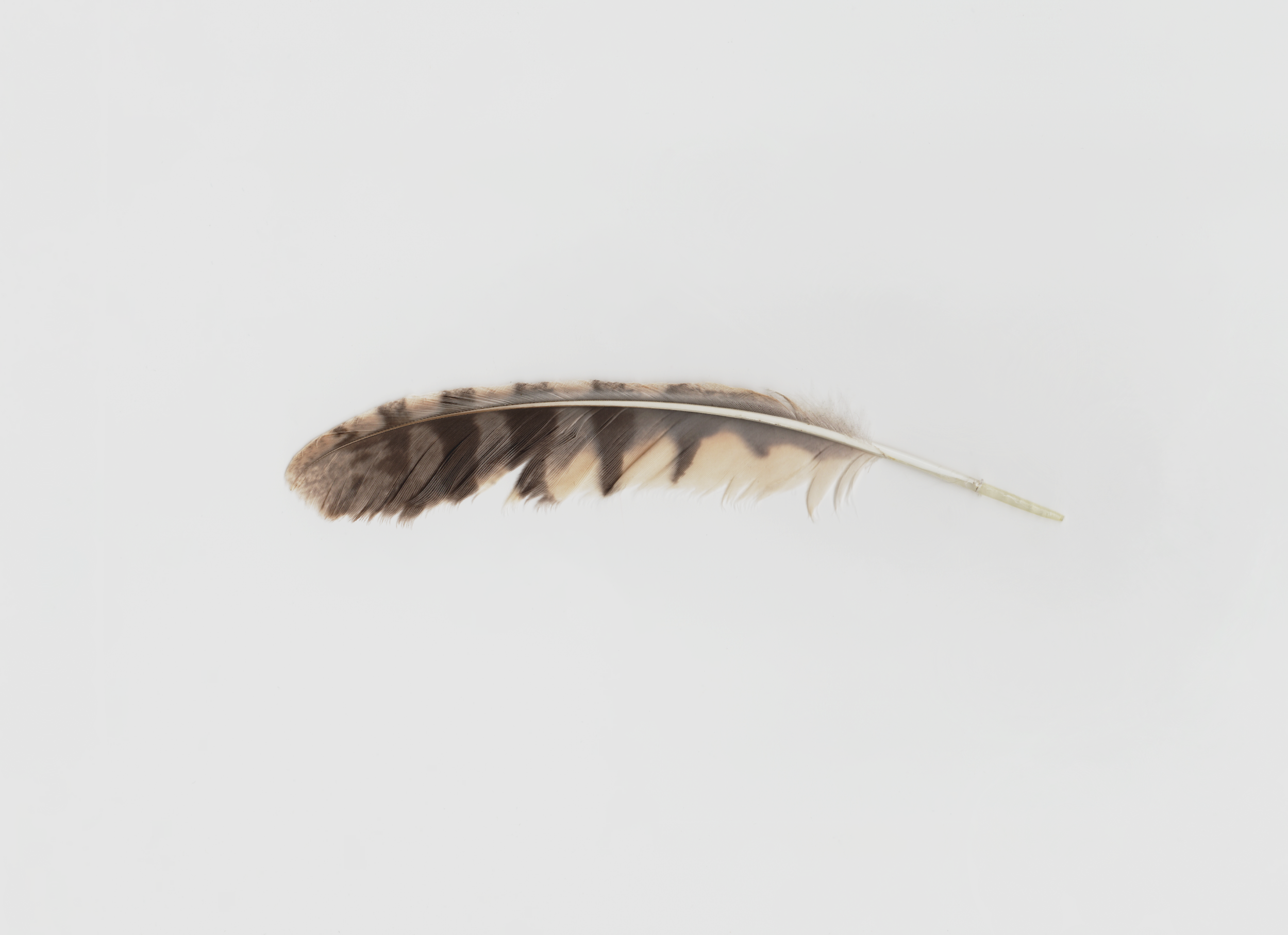
Two chapters, and she splits them by problem rather than by anatomy. The first deals with colour and sound. It opens with a male broad-tailed hummingbird's courtship dive, in which he synchronises the flash of his iridescent throat with the buzz of his tail feathers to within 300 milliseconds. Pigmentary colour from melanins and carotenoids is kept separate from structural colour, which comes from thinfilm interference in barbule nanostructure at scales below a micron-levels. Owl silence gets taken apart into three distinct mechanisms rather than treated as one: leading-edge serrations, a velvet surface, and trailing fringes. The facial ruff is handled separately again, as an acoustic collection problem rather than a noise suppression one.
The second chapter comes back to the duck. The repellency turns out to be a matter of surface energy and surface geometry, and Gibson makes it quantitative. Water sits on glass at a contact angle of about 7 degrees, on paraffin wax at about 109 degrees, and on the keratin of a Canada goose feather shaft at about 102 degrees. She then explains surface energy through the bonding asymmetry of atoms sitting at a free surface, which is the actual physics rather than a picture of it. The preen gland, incidentally, does have a job. It keeps keratin from drying out and going brittle, and it holds down bacteria and fungi. It just isn't the one we credit it with.
Bones
This is where the materials scientist is most visible, and it contains the book's second good demolition.
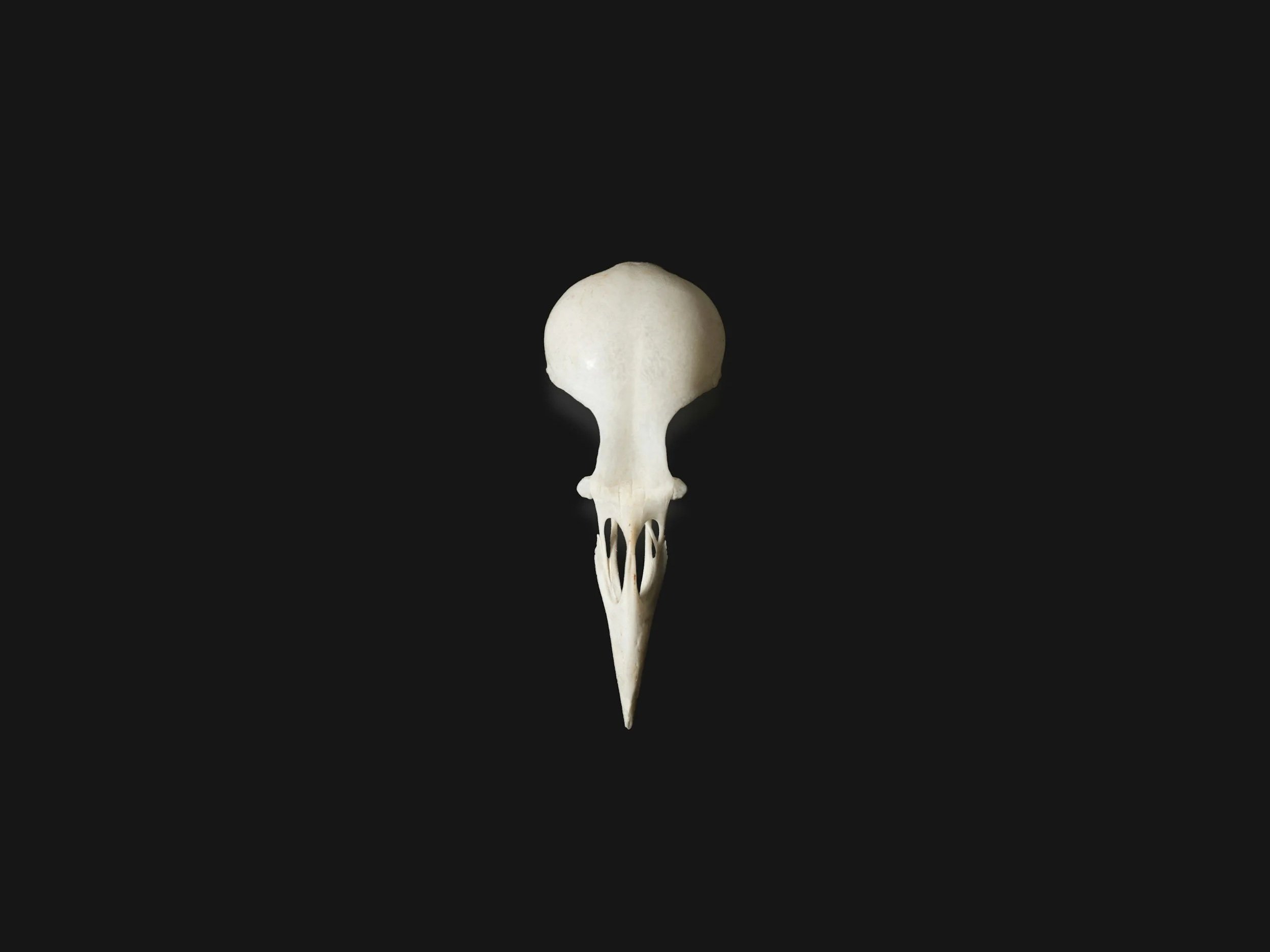
Birds do not have hollow bones. Most bird bones are filled with marrow, for the straightforward reason that marrow is where blood cells are made. Only some of them are hollow and connected to the respiratory air sacs, chiefly the humeri, certain neck vertebrae and the sternum. What actually characterises bird long bones is that the cortical wall is unusually thin relative to the diameter. We all know now!!!
The flatter bones do something more interesting. The carpometacarpus is built as a sandwich section, with solid cortical skins either side of a porous core. Anyone who has specified aerospace panels will recognise it immediately, because it is the standard engineering answer to getting bending stiffness at low mass. Gibson traces the observation back to D'Arcy Thompson's 1917 drawing of a vulture's metacarpal and forward into her own research career.
Biology, then mechanism, then engineering principle. She does not skip the middle step, and the middle step is what most writing in our field leaves out.
Bills
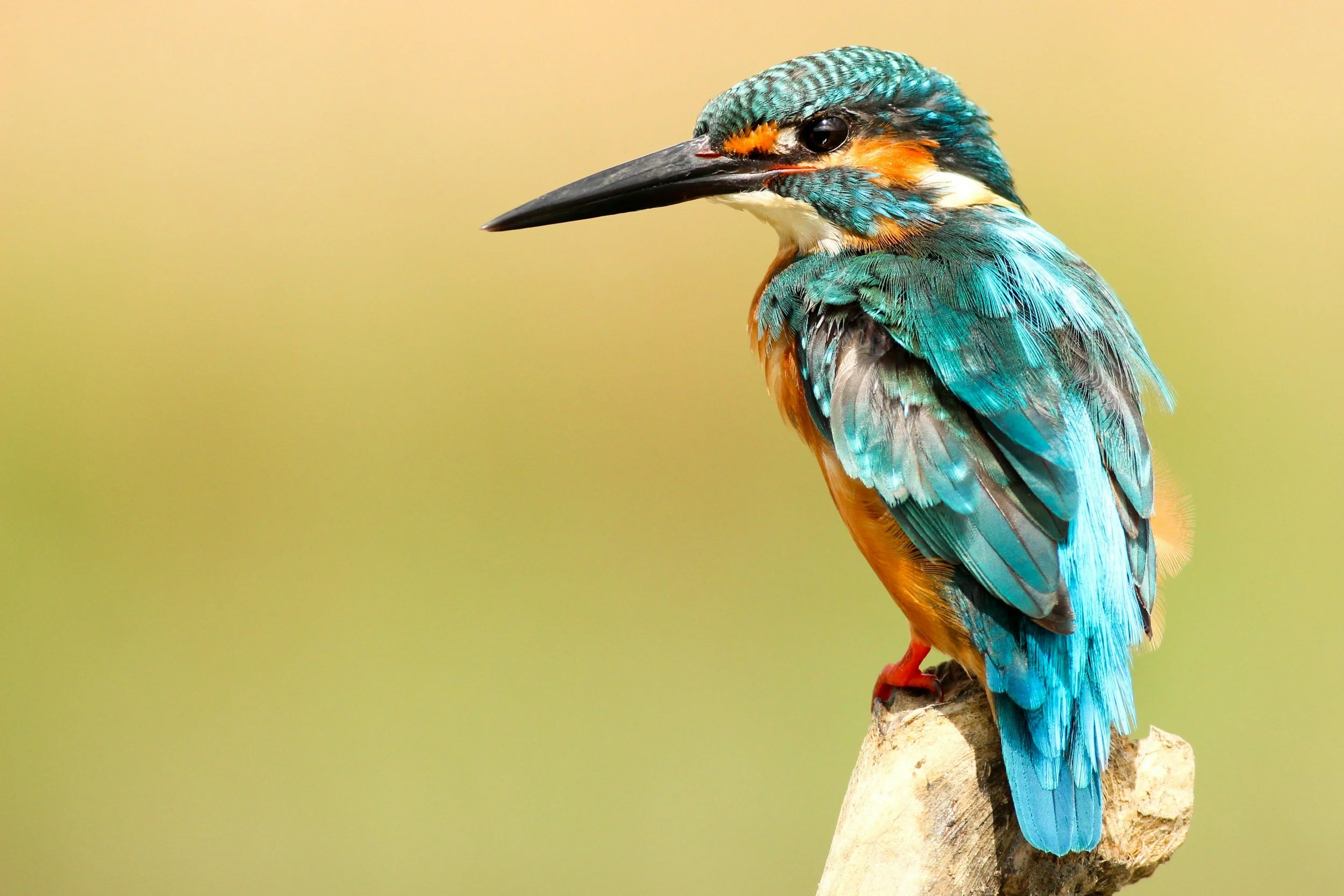
Gibson opens this one at the Wild Centre in the Adirondacks, standing in front of a twice-life-size wooden pileated woodpecker mounted on a tree trunk, with a giant Swiss Army knife opened up against the same trunk. Birds gave up their hands to build wings, so the bill must do the handiwork.
She then sensibly abandons any attempt at a taxonomy and gives us three cases instead. Woodpeckers and impact tolerance, through the hyoid apparatus, the offset between upper and lower bill tips, and the foam-like interior of the skull.
Calidris sandpipers detecting buried prey without touching it, using Herbst corpuscles to read pressure differences in saturated sand. Phalaropes spinning on the surface and then walking droplets of plankton-laden water up the bill on surface tension alone.
None of those is a shape. All of them are mechanisms.
Eggs
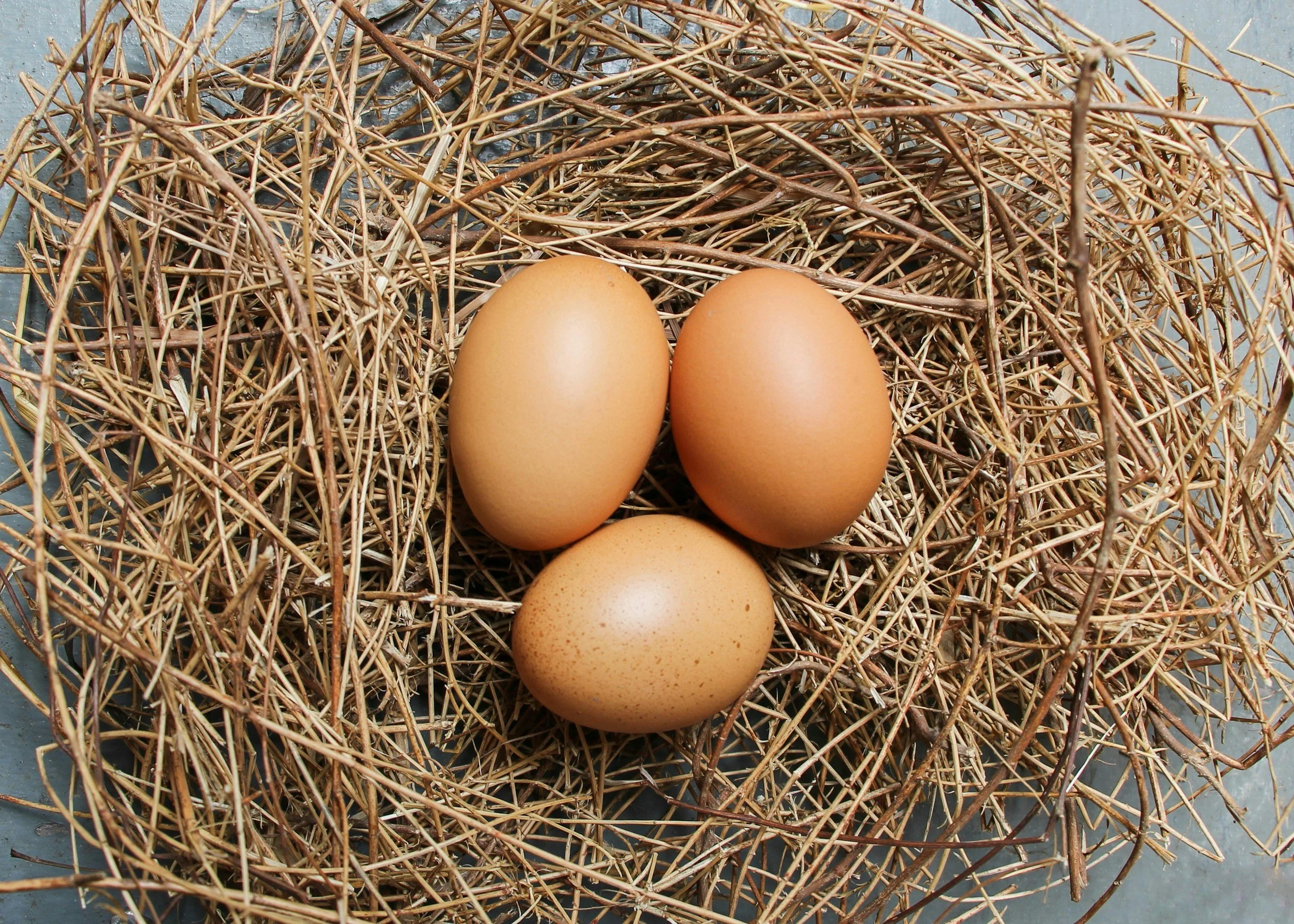
Four questions, worked through in order, on how an egg is assembled along the oviduct. What produces the colours and patterns, and why cavity nesters lay white while ground nesters lay speckled. Why shapes run from nearly spherical to sharply asymmetric, which turns out to track flight ability and body form rather than nesting habit alone. And how a shell manages the awkward trick of bearing an incubating parent while staying breakable from the inside.
The shell is a thin-walled pressure vessel with a deliberate directional weakness. It is a nice piece of engineering, and Gibson treats it as one.
Flight
Two chapters, split along the force balance, which is the right way to do it.
The first deals with weight and upward force. Birds typically weigh a third to a half of a mammal of comparable length, and she gives the comparisons directly: a house sparrow against an eastern chipmunk, a rock pigeon against a grey squirrel, an American crow against a cottontail rabbit. All three ratios land between a third and a half.
The second chapter handles drag and thrust. Three sources of drag separated properly: V-formation flight supported with the pelican heart rate work and the GPS-tracked ibis study. Soaring split into thermal and dynamic. A closing run through hovering, underwater flight in alcids and penguins, and the local rules that generate starling murmurations.

So can you build from it?
Well… not yet. And this is the part worth being clear about.
Gibson explains mechanisms. She does not specify them. You finish the bones chapter understanding why a sandwich section resists bending efficiently. You do not have the relative density relationships that would let you size one. You finish the feathers chapter knowing that contact angle and surface geometry govern repellency. You do not have the roughness parameters or the wetting-regime criteria that decide whether a given surface will behave that way in practice. For those in biomimetics, this is helpful.
That is not a fault. She states her constraints openly before the first chapter: no scientific background assumed, calculations confined to boxes you can skip, mathematics held to arithmetic and exponents. Those were the right calls for the audience she chose. But they place the book at a particular point in the chain that runs from biological observation to working technology. It clears the first step properly and then stops.
For those of us working in biomimetics, that needs saying plainly. This is an excellent entry point and an unreliable endpoint. On its own, it will get you as far as recognising the mechanism and framing the problem. It will not get you to transfer. Treat it as a source for design decisions rather than as a route into the literature, and you will find yourself working from qualitative description where you need quantitative constraint.
The references are the real prize
Which brings me to the feature that is easiest to overlook and hardest to overvalue. There are roughly 165 references, sitting at the end of each chapter and subdivided by section topic. Separate lists for feather colour, for creating sound, for suppressing sound, for collecting sound, for water repellency, for thermal insulation, and on down the book. They are overwhelmingly primary peer-reviewed literature. Journal of Experimental Biology. Proceedings of the Royal Society. Nature Communications. Journal of Anatomy. Journal of the Royal Society Interface. Prum and colleagues on structural colour. Bachmann and Wagner on barn owl wing morphometry. Clark, Elias and Prum on aeroelastic flutter.
One pairing makes the whole point. The preface cites her own 2006 Journal of Zoology paper on woodpecker impact, and it cites Cellular Solids, written with Michael Ashby, which is where the quantitative mechanics of foams and honeycombs actually live. Chapter 3 describes trabecular bone in prose. Cellular Solids, flagged two pages into the book, gives you the scaling laws. The distance between those two texts is exactly the distance between reading about a mechanism and being able to use one.
This approach to the book is unusually generous and unusually well organised. Enter at any section, take the mechanism as your search term, and you are straight into the primary sources. Read it that way, as an annotated route into six separate research literatures assembled by somebody who has actually read them, and it is worth a good deal more than its page count suggests.
One last thing, and it may frustrate some readers. Gibson makes almost no claim to biomimetics at all. The terms appear in her reference lists and essentially nowhere in her body text. She is explaining how birds work, not proposing what we should build from them. I take that as restraint, and I prefer it. There is more than enough writing in circulation that runs the other way, starting from the application and reasoning backwards to a biological story that supports it.

Worth your time?
Yes, with a condition attached.
Birds Up Close is the most mechanistically serious popular book on biological materials I have read in a long while. It explains rather than gestures. It kills off at least two claims that should have died decades ago. And it is honest about being a starting point rather than a manual.
Read it for the mechanism recognition, which sits well above the standard of most comparable writing. Then read the references, because that is where the transferable content is. The book will not do the second job for you, and it never pretends it will.
So here is my question to you. How many books in our field explain the mechanism properly and then hand you the primary literature to go further? I can think of very few. Professor Gibson has taken how she teaches and opens up curiosity of both materials and birding. This book is more like a seminar with a world-renowned materials scientist than a standalone book. Use it as one.
Epilogue - Sanctuary and solace
Gibson had a complete draft by the spring of 2019. That April her wife Jeannie was diagnosed with glioblastoma. The epilogue is an account of Jeannie's life, her illness and her death, and of what birding meant during it. It is written with restraint and without a shred of sentimentality.
It also reframes everything before it. Those chapters on feather microstructure turn out to be, among other things, a record of sustained attention during a period when attention must have been very hard to sustain. The dedication only makes sense once you have read it.
Reviewed by Richard James MacCowan (founder of Biomimicry Innovation Lab)
Originally published in Zygote Quarterly Issue #41.
Birds Up Close: An Engineer Explores Their Hidden Wonders by Lorna Gibson is published by MIT Press.